



Michael Pollan Paleo Interview
Last week, Mother Jones magazine published a scathing article with an obvious click-bait title of "Michael Pollan Explains What's Wrong With the Paleo Diet," immediately sending a flurry of angry Paleo Dieters and Paleo sustainability enthusiasts into protest. As most of us know, the Paleo Diet involves eschewing post-agricultural revolution (neolithic) foods such as wheat, dairy, and legumes, and instead of following the Paleolithic template of our hunter-gatherer ancestors— primarily...


Last week, Mother Jones magazine published a scathing article with an obvious click-bait title of "Michael Pollan Explains What's Wrong With the Paleo Diet," immediately sending a flurry of angry Paleo Dieters and Paleo sustainability enthusiasts into protest. As most of us know, the Paleo Diet involves eschewing post-agricultural revolution (neolithic) foods such as wheat, dairy, and legumes, and instead of following the Paleolithic template of our hunter-gatherer ancestors— primarily focusing on a diet of meat, fruits, vegetables, nuts, and seeds. In the article, written by Cynthia Graber, the celebrated food author is quoted as responding to our dietary regimen in the latest episode of the Inquiring Mindspodcast saying, "The trouble with that view, however, is that what they're eating is probably nothing like the diet of hunter-gatherers." He continues, "Most people who tell you with great confidence that this is what our ancestors ate—I think they're kind of blowing smoke." Like most of us in the Paleo, Community knows, following the Paleo Diet doesn't mean we are going on pack hunts for elk in the Alaskan Tundra armed with crude tools, spearfishing for our seafood, or yearning for North American Mastodon burgers... No, but we are eating the dietary proxies of the aurochs, wild junglefowl, and the like... because Paleo is not a historical reenactment, it's just a template. Because Graber's article was purposefully inflammatory, and the Inquiring Minds podcast was really centered on Pollan's latest book, Cooked, I felt it was important to press Michael for a more thorough explanation of his views regarding the Paleo Diet. Besides, we desperately needed some clarification from this figurehead of the Food Movement to set the record straight once and for all.
1. Michael Pollan, what are your main concerns regarding the popularity of the Paleo Diet?
 I have concerns about ALL diets, frankly, but think Paleo is better than most, and the logic behind it makes a certain sense. However, I think it's hard to follow now that most of our meat is raised in feedlots on grain diets. Meat today is not like meat ten thousand years ago. Grass-fed definitely comes closer, and wild game closest of all. I also think that humans have changed in ways that make some modern foods more suitable. We've evolved to eat some of the novelties of agriculture, and now produce enzymes that allow us to digest milk as adults (lactase) and grain (amylase). So the food is not the same, and we're not the same. Nor are our gut microbiomes. You can't go home again, as Thomas Wolfe said— this is true in evolution too.
2. As you suggest, animals bred by modern agriculture are fed "artificial diets of corn and grains", rendering unhealthy animals. Why are corn and grains "artificial" for these animals?
Not for all of them, but for cows, certainly—they are grass-eaters—ruminants— who are poorly adapted to a diet heavy in grain. How do we know? They get sick and must be given antibiotics to tolerate it.
3. Do you believe that humans evolved, similar to the cows described above, with a species-appropriate diet? And if we did, is the Standard American Diet which focuses on the relatively new modern agriculture staples of wheat, corn, and soy, also "artificial"?
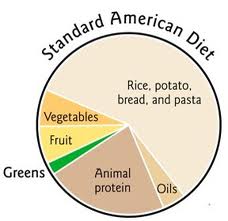 Compared to cows, we are omnivores and can eat a wide variety of diets. Go around the world and you will find humans thriving on a wide range of traditional diets: high protein (the Masai); high starch (native Americans in Central America) and high fat (Inuit). So I'm dubious there is one ideal diet for our species, though certainly, some are better than others. The Western Diet, or Standard American Diet, as it's sometimes called, is a catastrophe. (Though give us a few millennia and we'll probably adjust to it.)
4. When you researched omega-3 fatty acids, you were led to believe that over-consumption of vegetable oils and lack of wild-caught fish led directly to coronary heart disease. Given your conclusions, how do you reconcile promoting the consumption of whole wheat as an ideal protein source given its 27:1 omega 6 to omega 3 Essential Fatty Acid (EFA) profile[1]?
Whole wheat is better than white flour— that's all I'll claim for it, and it's hardly controversial. We probably do eat more omega six than we should. Though real whole wheat, with the germ intact, contains more omega 3s than white flour.*
5. Are grains (corn, wheat, barley, etc.) grown in a more sustainable manner now than they were back in ancient times when they were first grown?
[Michael Pollan did not respond to this question.]
6. Michael, in the past you have said that "a vegan in a Hummer has a lighter carbon footprint than a beef eater in a Prius." If all adherents to the Paleo Diet sourced their fruits, vegetables, and meats from small, decentralized, counter-industrial-agriculture farms, would you consider that diet more sustainable than dietary regimens that rely heavily on grain monocultures— even if that came with a heavier reliance on meat?
I am not against meat and think any truly sustainable agriculture will have to contain animals to recycle nutrients. I eat meat, but less now that I insist it is sustainable—because sustainable meat is more expensive, and it still has an environmental cost. On ethical grounds, I think we should favor meat from animals that don't compete with humans for food.
7. Where can one source pasta and flour for making bread that doesn't come from a monoculture?
There are more and more diversified farms here in California that are including wheat in their rotation, usually as a winter crop (since it doesn't usually need to be irrigated.)
8. Why do you feel that the gluten-free trend is ridiculous?
I don't think it's ridiculous. Some people struggle with celiac (about 1%) and somewhat more (about 6%) struggle with gluten intolerance. But the trend is much bigger than that, which suggests some people are being influenced by the trend itself.
9. What are the unique nutritional benefits to grains that cannot be found by adhering to a Paleolithic template?
I don't know enough to say, but whole grains do contain fiber, which is important in any diet.
10. Sir Albert Howard, the father of the Organic Movement once said that the health of the "soil, plant, animal, and man is one and indivisible." Do you agree with that statement?
YES.
*Pop Quiz Question Michael Pollan: What crops and crop-growing methods were partially responsible for the 1930's Dust Bowl, and how did that affect the soil?
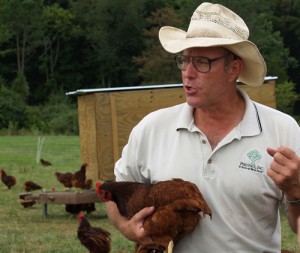 You tell me: grain probably. Yes, perennial pasture is better for the soil and sequesters more carbon. If you've read Omnivore's Dilemma you know I think that sort of meat-based agriculture is much more sustainable than any grain-based agriculture— though even [Joel Salatin's] Polyface Farm depends on someone to grow a lot of grain for it.
11. Some studies have indicated that the consumption of red meat causes cancer, and as you mentioned there are confounding factors. What's interesting is that these studies which indicated that it caused cancer involved animals who were fed an "artificial" diet, and studies of grass-fed meat actually indicated anti-tumorigenic properties due to their CLA, Vitamin E, and anti-inflammatory EFA ratios. When you discuss meat consumption, do you make this distinction?
I don't know enough to make a distinction, but I wouldn't be surprised if one could be made. I think the science on CLA is still embryonic.
12. I'd like to address your comment, "Most people who tell you with great confidence that this is what our ancestors ate—I think they're kind of blowing smoke." I agree that we may not know the exact macronutrient ratios of our hunter-gatherer ancestors, but many Anthropologists and Paleo Diet adherents believe that they did not subsist on agricultural diets. Michael Pollan, Do you believe that this is an erroneous assumption?
I don't follow you, sorry.
13. Would you consider coming to this year's Ancestral Health Symposium?
Someday.
- Hands ES. Nutrients in food. Philadelphia, PA7 Lippincott Williams & Wilkins; 2000. p. 1-336. *Whole Wheat 27:1 Omega 6, Omega 3 values, White Bread 21:1 Omega 6 Omega 3 values, Hands ES. Nutrients in food. Philadelphia, PA7 Lippincott Williams & Wilkins; 2000. p. 1-336.
Michael Pollan Paleo Interview by Karen Pendergrass.
Related Reading
- Interview with Alan Aragon Paleo Critic
- Paleo Movement Interview with Allan Savory
- Interview with Paleo Athlete Tony Camper
Share: